
_edited.png)
Did My Cat Just Apologise? How Cats Say Sorry in Their Own Way


You knocked over their water bowl by accident. You stepped on their tail in the dark. You came home late and dinner was an hour delayed. And now your cat is sitting across the room, looking at you with that particular expression that is somewhere between wounded dignity and quiet judgement.
But then - something shifts. They approach. They press their head against your hand. They curl up beside you and begin to purr.
Did your cat just apologise? Or accept yours?
The honest answer is: probably both. Cats don't experience guilt and reconciliation exactly the way humans do - but they do have a rich emotional life, and they absolutely have ways of repairing the peace after tension or conflict. Once you know what to look for, you'll recognise it immediately.
First - Do Cats Actually Feel Sorry?
This is worth addressing honestly. Cats don't experience guilt in the way humans do - they don't replay an event, conclude they were wrong, and decide to make amends in a conscious, deliberate way. What they do experience is social tension, and they are highly motivated to resolve it.
Cats are more socially attuned than their independent reputation suggests. They notice when the atmosphere has shifted - when you're upset, when there's been a conflict, when something feels unresolved between you. And they respond to that. Whether we call it an apology or a reconciliation behaviour, the intention and the result are the same: they want things to be right between you again.
The Signs Your Cat Is Making Peace
The Slow Approach
After tension - whether your cat got a fright, behaved in a way that caused disruption, or simply feels that something is off between you - watch for the slow, deliberate approach. Not a demand. Not a strut. A careful, considered walk in your direction, often with the tail held gently upright. This is your cat choosing to close the distance. That choice matters.
The Head Bump and Cheek Rub
One of the most sincere gestures in a cat's vocabulary. When a cat presses their forehead or cheek against you, they are sharing their scent - marking you as safe, familiar, and belonging to them. In a moment of repair, this gesture says: we are still the same. This is still us. It is intimate and deliberate, and it is about as close to "I'm sorry, we're okay" as a cat gets.
Slow Blinking
If your cat settles near you after a tense moment and offers you a long, slow blink, receive it graciously. As we explored in our body language guide, the slow blink is a cat's deepest expression of trust and affection. Offering it after conflict is a conscious olive branch. Blink back slowly - you're accepting it.
Grooming You
Being groomed by your cat - whether they lick your hand, your hair, or your arm - is reserved for those they feel genuinely bonded to. If this happens after a difficult moment, it is your cat at their most tender. They are doing for you what they do for the cats they love most. That is not nothing.
Simply Showing Up
Sometimes the apology is just presence. Your cat who retreated to another room reappears and sits near you - not asking for anything, not performing affection, just being there. For a creature who chooses solitude freely, choosing to be near you is its own kind of statement.
The Belly Expose
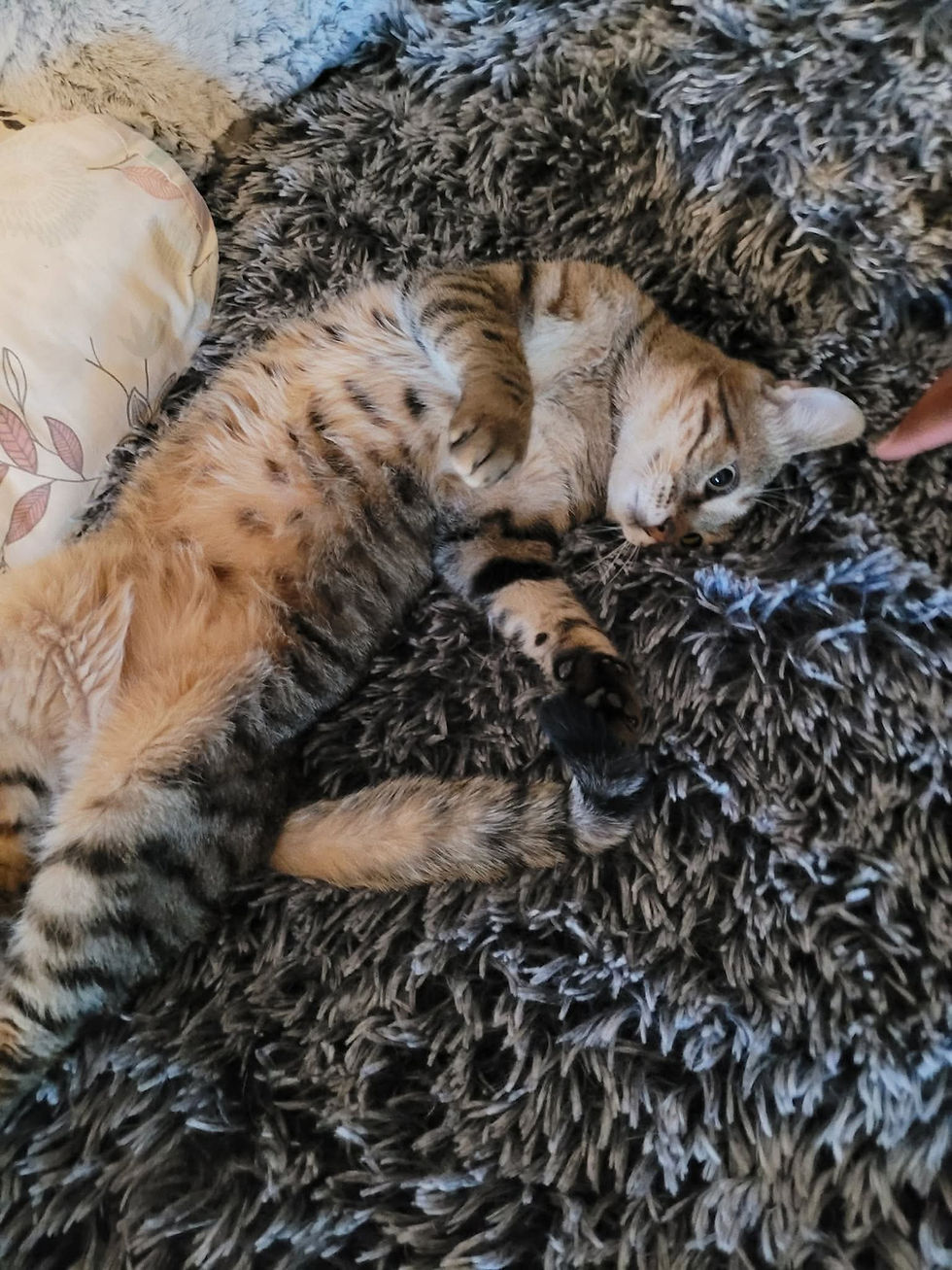
A cat who rolls onto their back and shows you their belly after tension is offering something profound - vulnerability. The belly is the most unprotected part of a cat's body. Showing it to you is an act of complete trust. It says: I feel safe with you. Whatever happened, it's gone.
How to Respond to a Cat's Apology
This part matters more than people realise.
When your cat approaches to make peace, meet them gently. Lower yourself to their level if you can. Let them initiate contact rather than reaching for them. Speak softly. Offer a slow blink. The reconciliation your cat is offering is genuine - honouring it with patience and calm will strengthen the bond between you more than you might expect.
Avoid the temptation to pick them up immediately or overwhelm them with fuss. A gentle, quiet reception tells your cat that the repair worked - and that coming to you is always safe.
And What About When You're the One Apologising?
Cats don't understand the words "I'm sorry." But they understand tone, energy, and consistency. If you've accidentally hurt or frightened your cat, the best apology you can offer is:
A calm, quiet presence - no sudden movements or loud sounds
Letting them come to you in their own time
A favourite treat offered gently, without pressure
Simply being reliably, peacefully there
Trust, for a cat, is built in small moments. And it is rebuilt the same way.
The Bigger Picture
The fact that cats seek reconciliation at all tells us something important: they value their relationship with you. They notice when it's been disrupted, and they want to restore it. That is not the behaviour of an indifferent animal. That is attachment.
So the next time your cat approaches after a difficult moment, presses their head into your hand, and settles beside you with a quiet purr - know that something real just happened between you.
They came back. And they meant it.
Want to understand your cat better? Follow Let's Be SMART for more guides on cat behaviour, welfare, and everything in between.
Together, we’re creating a kinder, safer world for cats - one paw at a time. Thank you for being part of the journey.
Follow us on social media for daily updates, adoption stories, and volunteer highlights!
Adopt Don't Shop - Adopt shelter cats from Greece:


Comments